A Minnesota builder compares SIPs, stick-frame, and ICF on cost, energy, and schedule, including where SIPs are the wrong call for your build.


Once you start planning a home in Northern Minnesota, you will run into a decision most homeowners never expected to make: how the house should actually be built. Three systems come up most often, and each has advocates who will tell you it is the only right answer.
We build with structural insulated panels, so you might expect this post to argue that SIPs win every time. They don’t, and we wouldn’t trust a builder who told you they did. What follows is an honest comparison of the three methods, including when SIPs are the wrong choice. The goal is not to sell you a system. It is to help you make a decision you will be comfortable with for the next thirty years.
Before comparing them, it helps to understand what each method actually is.
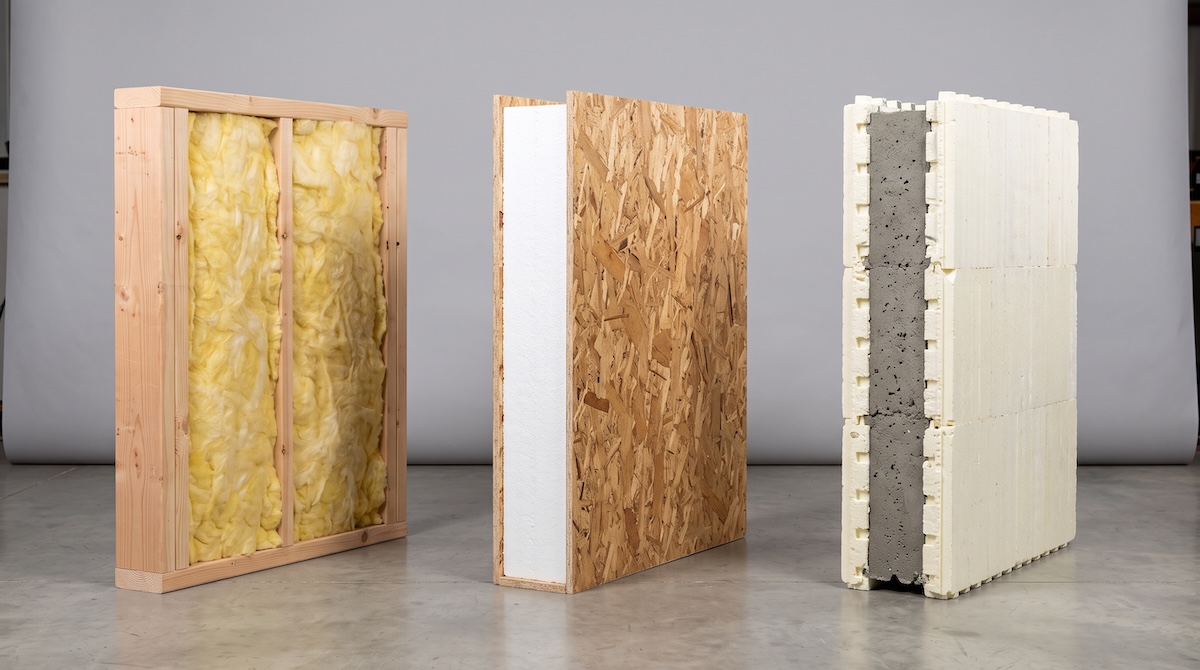
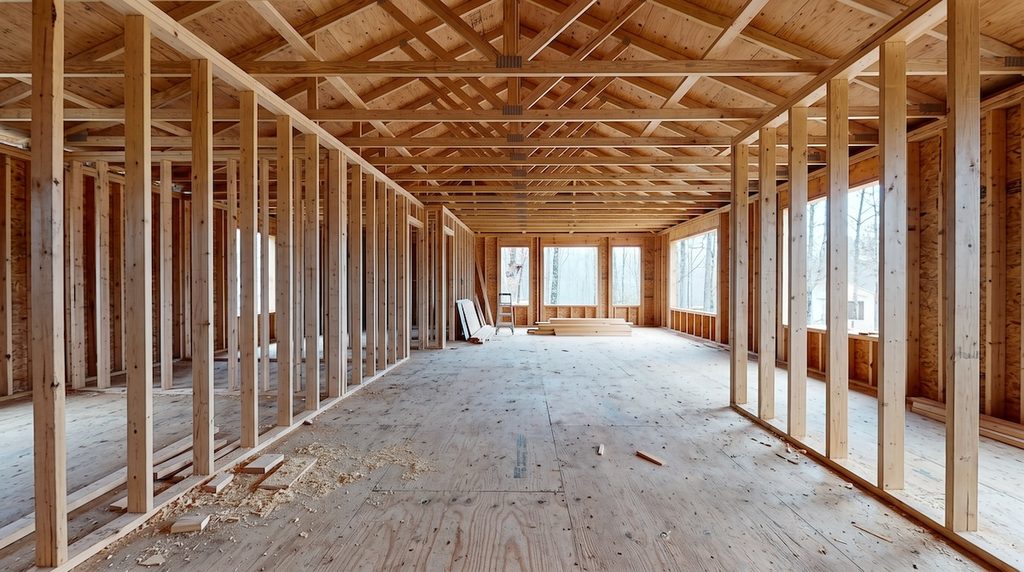
Stick-frame, or conventional framing, is the way most homes in America are built. A crew assembles a skeleton of dimensional lumber studs on site, covers the studs with sheathing and fills the cavities between the studs with insulation. It is familiar, flexible, and every builder knows how to do it. Its weaknesses are the ones we have written about before: every stud is a small path for heat to escape, and a site-built frame has countless small gaps that leak air.
A structural insulated panel combines framing, insulation, and sheathing into one engineered component, manufactured in a factory and delivered ready to raise. The insulation is continuous, the shell is airtight, and the structure goes up fast. This is the system we build with, and our SIP services are central to what we offer.
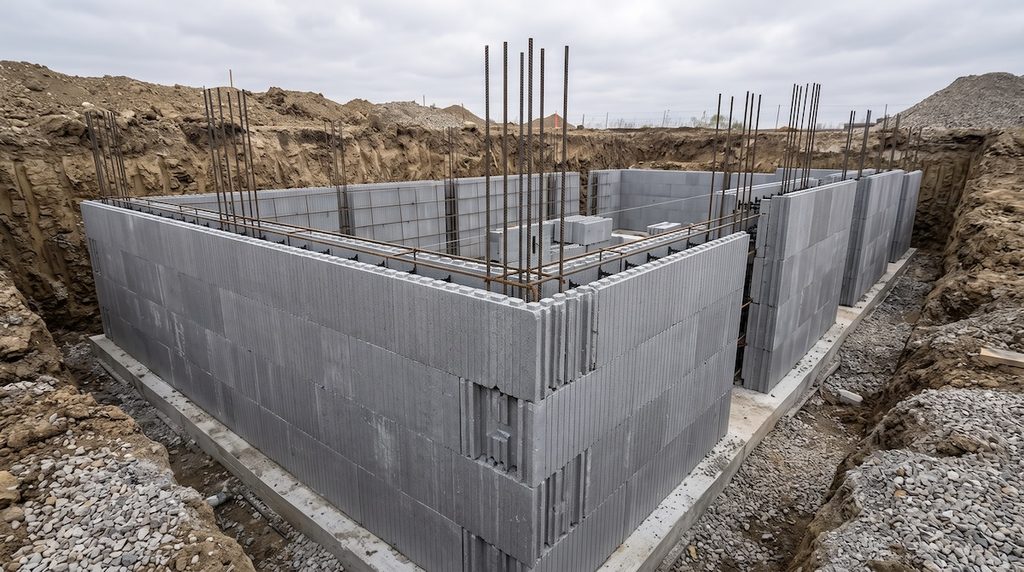
Insulated concrete forms are hollow blocks of rigid foam that stack like interlocking bricks and are then filled with poured concrete. The result is a wall with foam insulation on both faces and a solid concrete core in the middle. ICF is best known for foundations and basements, though it can be carried up through the above-grade walls of a whole house.
No single system wins on everything. Here is how the three stack up on the factors that actually shape a cold-climate home.
This is where the two engineered systems pull ahead of conventional framing. Both SIPs and ICF deliver continuous insulation with no repeating thermal bridges, and both produce a tighter shell than a site-built frame.
Between SIPs and ICF, the difference is subtle. SIPs typically achieve very strong airtightness because the shell has few joints, and those joints are sealed deliberately. ICF walls are also airtight, thanks to the solid concrete core. For a home where holding heat through a long winter is the priority, either engineered system is a serious step up from stick-frame. All three can meet our energy performance standards, but engineered systems get there with less effort and more consistency.
Cost is the first factor people ask about, and the honest answer is that it depends on the whole project, not the wall system alone.
Stick-frame usually has the lowest material cost and the widest pool of labor that can build it, which often makes it the least expensive to frame. SIPs cost more in materials, but you can recover some of that difference through a faster build and fewer on-site labor hours. ICF tends to be the most expensive of the three for above-grade walls, because concrete, rebar, and the pour itself add cost and complexity.
The important point is that a cheaper shell is not the same as a cheaper home to own. A stick-frame house that leaks heat costs more every winter it stands. The right way to compare is over the life of the home, not on the framing invoice alone.
This is where SIPs have their clearest advantage, and it matters more in Minnesota than in most places.
Because SIP panels arrive pre-cut and engineered, a shell can be raised and dried within days. On a remote North Shore site with a short building season, closing the structure quickly protects the work and shortens the time crews and equipment spend on a hard-to-reach lot. That speed is a real part of why SIPs pair so well with our remote building service.
Stick-frame is slower to close in and depends on the availability of skilled framing crews, which is not guaranteed in rural areas. ICF is slower still, because forming and pouring concrete is a more involved, weather-sensitive process, and it requires a crew experienced specifically in ICF.
Stick-frame is the most forgiving of last-minute changes, since a stud wall can be modified on site with ordinary tools. SIPs reward careful planning: panel layouts and openings are designed before the panels are ordered, which means changes are best made on paper rather than in the field. ICF sits in between, with strong structural capability but less freedom to revise once forms are set and concrete is poured.
Here is the part manufacturer brochures leave out. There are real situations where we would not recommend SIPs, and a builder who cannot name them is not being straight with you.
We would rather tell you a SIP home is not the right fit for your project than build one that disappoints you. Often, though, once we walk through your site, budget, and goals, SIPs turn out to be the strongest option, which is exactly why we build with them.
At the start of a project, our job isn’t to hand you a product. It is to help you weigh these systems against your specific site, budget, and plans, and to be honest about the trade-offs each one carries.
We build with SIPs because, for the kind of high-performance, cold-climate homes we specialize in, the system delivers comfort, efficiency, and durability more consistently than the alternatives. But that recommendation is earned on your project, not assumed. You can see the results across our completed homes, and we are happy to talk through where each method would land for you.
Book a Consultation with Works Construction to compare building systems for your North Shore build.
Which is better, SIP or ICF?
Neither is universally better; they suit different jobs. SIPs are an above-grade system that goes up fast and delivers excellent airtightness, making them well suited to walls and roofs on remote, cold-climate sites. ICF excels below grade and for foundations, where its poured-concrete core provides structural strength. Many high-performance homes use both: ICF or poured concrete below grade, SIPs above.
Are SIP homes cheaper to build than stick-frame?
Not usually on the framing invoice alone. Stick-frame typically has the lowest up-front material cost. SIPs cost more in materials but recover part of that through a faster build and fewer labor hours, and they cost noticeably less to heat over the life of the home. The fair comparison is total cost of ownership, not the shell price by itself.
Is stick-frame construction a bad choice for cold climates?
It is not a bad choice, but it asks more of the builder. A stick-frame home can perform well in a cold climate, but it requires careful air sealing and attention to thermal bridging at every stud, because the frame does not deliver those things on its own. Engineered systems like SIPs build much of that performance in from the start.
Can you combine building systems in one home?
Yes, and it is common. A frequent and sensible approach in Minnesota is an ICF or poured foundation below grade paired with a SIP shell above grade, so each system does what it does best. Deciding where one system ends and another begins is part of the design work we do at the start of a project.
The Works Construction Editorial Team consists of builders and consultants who design and build high-performance SIP homes for Minnesota’s North Shore and the Minnesota metro area. We build Above Code as a matter of practice and verify performance rather than asserting it. Learn more about our team.