The Cold-Climate HVAC: How Air Source Heat Pumps Work in the Northwoods
A Realist’s Approach to Cold-Climate Heating For years, the conversation around heating homes in the Northwoods followed a predictable path: oil, propane, or wood. These were the only systems deemed "tough enough" for a sub-zero winter. Today, that conversation is shifting. As energy prices fluctuate and we look toward more sustainable building practices, the air …
April 24, 2026
A Realist’s Approach to Cold-Climate Heating
For years, the conversation around heating homes in the Northwoods followed a predictable path: oil, propane, or wood. These were the only systems deemed “tough enough” for a sub-zero winter. Today, that conversation is shifting. As energy prices fluctuate and we look toward more sustainable building practices, the air source heat pump (ASHP) has emerged as a primary contender for cold-climate comfort.
However, a lingering skepticism remains. Many homeowners have heard that heat pumps “give up” when the temperature drops, leading to cold rooms and astronomical electric bills. If you are looking at a system through the lens of standard building codes, that skepticism is often justified.
At Works Construction, we don’t build to the minimum legal standard. We build Above Code. When a high-performance heat pump is paired with proper building science, it isn’t just a viable alternative, it is often the most comfortable and efficient way to live in a cold climate.
Key Takeaways:
The Physics of Heat: Modern cold-climate units can extract heat from outdoor air even at -15
Systemic Synergy: A heat pump is only as effective as the home’s thermal envelope (insulation and air sealing).
Above Code Sizing: We use Manual J calculations to avoid the common industry mistake of “over-sizing” equipment.
Integrated Health: High-performance homes require a plan for fresh air ventilation to work alongside the HVAC system.
Understanding the Technology: How Heat Moves in the Cold
To understand why a heat pump works at zero degrees, we have to look at the physics of heat transfer. A heat pump doesn’t “create” heat the way a furnace burns fuel; instead, it “moves” heat. Even in what feels like “freezing” air, there is a significant amount of ambient heat energy.
Cold-climate heat pumps use specialized variable-speed compressors and advanced refrigerants that can boil at extremely low temperatures. This allows the system to pull heat from the outside and concentrate it inside your home.
The misconception that these systems fail in the cold usually stems from older technology or “Standard Code” installations. Many contractors install units that aren’t rated for the Northwoods, or they fail to account for the defrost cycle logic required in high-moisture, high-snow areas. When designed correctly, a modern system maintains its capacity far below the point where traditional units would switch to expensive “emergency” backup heat.
The Works Differentiator: It’s Not Just the Box
Most HVAC companies are “box swappers.” They pull out an old unit and drop in a new one. At Works, we treat the heat pump as one component of a larger machine: your home.
Precision Sizing and Manual J
We refuse to use “rules of thumb” based on square footage. An oversized heat pump is just as problematic as an undersized one. It leads to “short-cycling,” where the system turns on and off rapidly, wearing out components and failing to dehumidify the air. We perform a rigorous Manual J load calculation that accounts for your home’s orientation, window quality, and airtightness.
Strategic Placement and Commissioning
In the Northwoods, placement is everything. We see many systems fail because the outdoor unit was placed where snow sheds off the roof or where wind drifts bury the coils. Works’ installations prioritize:
Elevation: Mounting units on specialized stands to stay clear of snow-pack.
Protection: Ensuring the unit is shielded from ice fall while maintaining optimal airflow.
Commissioning: This is the “Above Code” final step. We verify the refrigerant charge and flow rates under real-world conditions to ensure the system delivers the Coefficient of Performance (COP) it was designed for.
Why the Thermal Envelope is Your Best “Heating” Tool
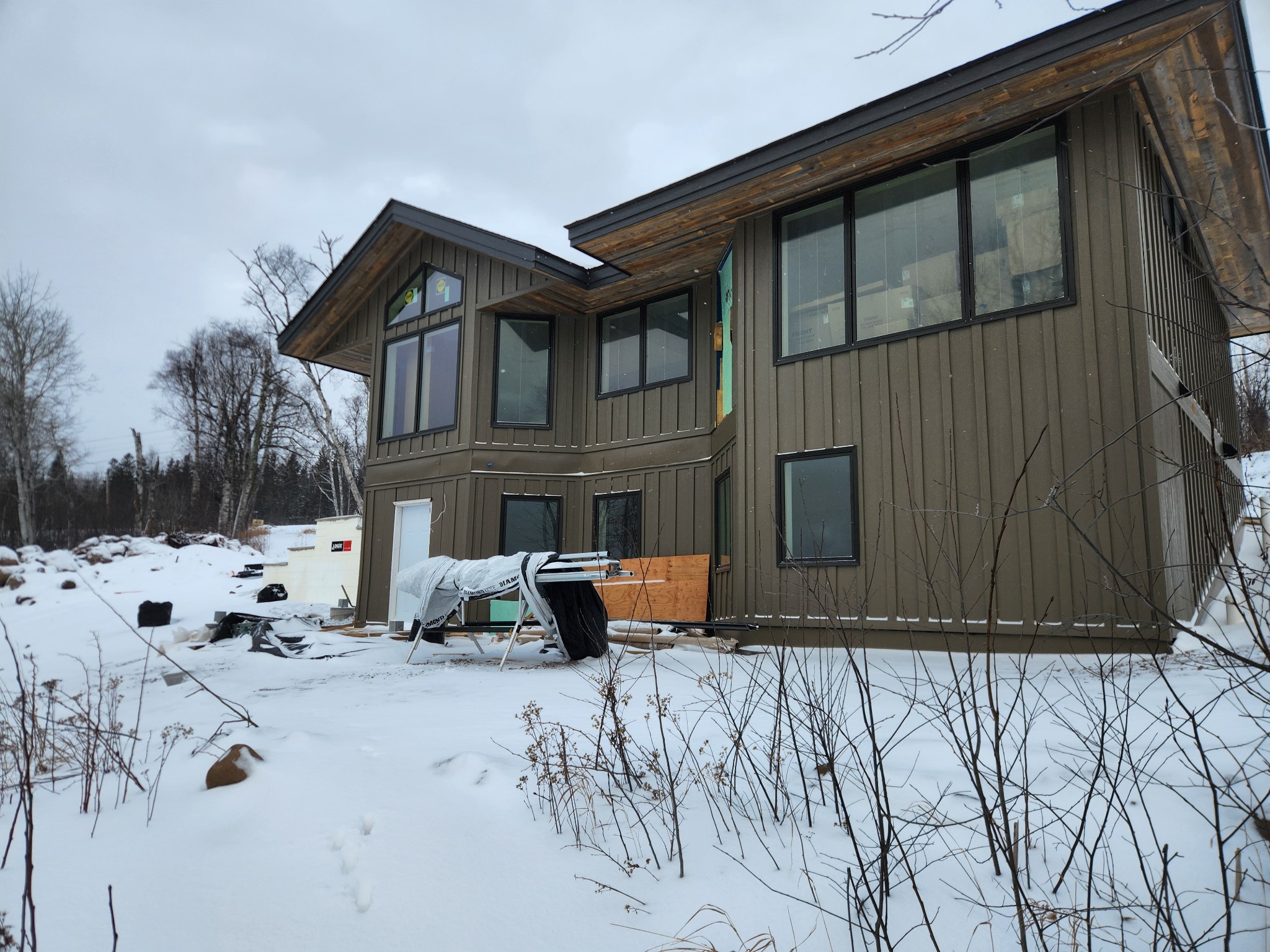
If you put a high-performance engine in a car with a massive fuel leak, the car still won’t perform. The same is true for your home. We approach every ASHP installation by first looking at the thermal envelope.
This is where Passive House principles come into play. By focusing on air sealing and high-quality insulation, we reduce the “load” on your heating system. When a home is airtight, the heat pump can run at its lowest, most efficient speed to maintain a steady temperature. This eliminates the “cold spots” and drafts that many associate with winter living.
Furthermore, a tight home requires a ventilation strategy. We don’t just install a heat pump; we ensure your home has a way to breathe. Integrating the system with an Energy Recovery Ventilator (ERV) ensures you have a constant supply of filtered, fresh air without losing the heat you’ve already paid for.
The Result: Comfort, Not Compromise
Transitioning to an air source heat pump isn’t about “sacrificing” for the environment. It is about upgrading your lifestyle. Our clients often tell us that their homes have never felt more consistent.
“The team at Works didn’t just install a heater. They transformed how our home feels in January. It’s quieter and more consistent than our old boiler ever was,” says Mark R., a homeowner who recently moved to an Above Code system.
By removing the reliance on fossil fuels, you are also protecting your home from the volatility of fuel prices. You are investing in craftsmanship and durability that will keep your home healthy for decades to come.
Your Next Step: An Above Code Consultation
Transitioning to high-performance heating is a process that requires a plan, not a sales pitch. We want to help you understand the specific building science of your home and how an air source heat pump can fit into that system.
[Schedule Your Free Consultation with Works Construction]
Frequently Asked Questions
Do air source heat pumps really work in negative temperatures?
Yes, modern cold-climate heat pumps are specifically engineered to extract heat from the air at temperatures as low as minus fifteen degrees Fahrenheit. While their efficiency drops slightly as the temperature hits extreme lows, they remain far more efficient than electric baseboard heating or old-fashioned furnaces. We only install units that are verified for our specific regional climate.
What is the “Above Code” approach to insulation?
The “Above Code” approach involves going beyond the standard fiberglass batts you see in most homes. We prioritize air sealing and high-density insulation like spray foam or mineral wool to eliminate drafts. By making the home airtight, we ensure that the heat your pump produces stays inside your living space for as long as possible.
How much can I save by switching from oil to a heat pump?
Most homeowners see a significant reduction in annual energy costs when switching from oil or propane to a high-performance heat pump. While savings vary based on utility rates, the average homeowner can save thirty to fifty percent on their annual heating bills. Additionally, the federal government offers tax credits up to two thousand dollars for qualified heat pump installations.
Does a heat pump provide air conditioning in the summer too?
One of the biggest benefits of an ASHP is that it is a dual-purpose system. In the winter, it moves heat from the outside air into your home. In the summer, it reverses the process, moving heat from inside your home to the outside. This provides incredibly efficient, whisper-quiet air conditioning without the need for a separate AC unit.
Will I need to upgrade my electrical panel for a heat pump?
In many older homes, a panel upgrade to 200 amps is necessary to support the load of a modern heat pump system. During our initial audit, we check your existing electrical capacity and include any necessary upgrades in our project proposal. We ensure the entire system is safe, labeled, and fully compliant with modern safety standards.
What is a Manual J calculation and why does it matter?
A Manual J is a professional protocol used to determine the exact amount of heating and cooling a building needs. It accounts for your home’s orientation to the sun, the number of occupants, the type of windows, and the insulation levels. This ensures your system isn’t “oversized,” which prevents the rapid on-off cycling that leads to premature equipment failure.
About the Author
The Works Construction Editorial Team is led by building science experts dedicated to the “Above Code” philosophy. With decades of combined experience in the New York and Northeast regions, we specialize in high-performance construction that prioritizes durability, health, and energy efficiency. Our background in complex commercial and high-end residential projects allows us to bring a level of technical precision to HVAC installation that is rare in the industry. We are committed to educating homeowners on the benefits of Passive House principles and modern building science. When we aren’t on-site, we are researching the latest in cold-climate performance to ensure our clients’ homes remain sanctuaries, no matter the weather.