Beyond the View: Why “Above Code” Windows are Essential for Cold-Climate Comfort
The Glass Paradox Windows are the most complicated part of your home’s exterior. We want them to do two completely opposite things: we want them to be invisible so we can enjoy the Northwoods scenery or the NYC skyline, but we also need them to act like a solid, insulated wall that keeps out sub-zero …
February 24, 2026
The Glass Paradox
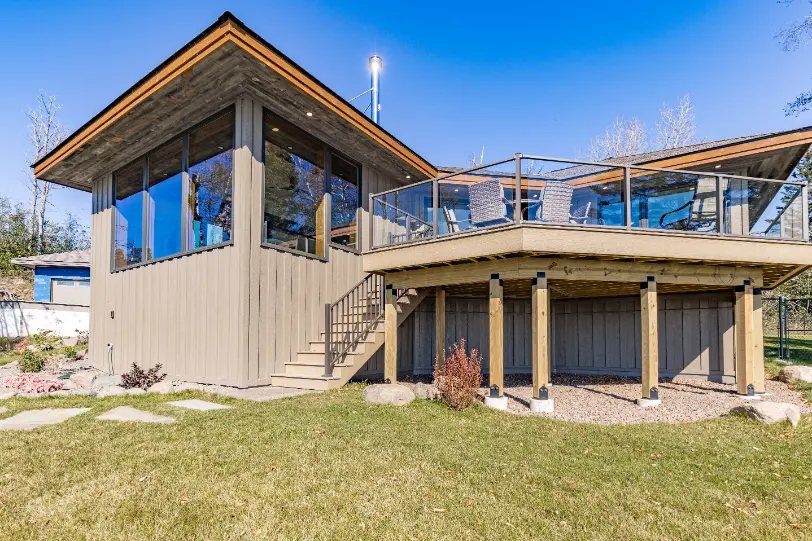
Windows are the most complicated part of your home’s exterior. We want them to do two completely opposite things: we want them to be invisible so we can enjoy the Northwoods scenery or the NYC skyline, but we also need them to act like a solid, insulated wall that keeps out sub-zero temperatures.
In standard construction, windows are often the “weak link.” You can have the best insulation in the world, but if your glass is underperforming, your home will never feel truly comfortable. You’ve likely experienced this: standing near a window in the winter and feeling a “phantom draft.” It isn’t always air leaking in; often, it is a convection current caused by your warm indoor air hitting the cold glass and “falling” to the floor.
At Works Construction, we don’t look at windows as just “units” to be installed. We look at them as high-performance components that must be integrated into the thermal envelope. Building Above Code means selecting windows and doors that don’t just meet the minimum energy ratings, but actively contribute to the health and durability of your home.
Key Takeaways:
The U-Value Myth: A window’s R-value is usually much lower than the wall; we focus on the U-value (the rate of heat loss) to ensure high performance.
Triple-Pane is the Standard: In cold climates, triple-pane glass isn’t a luxury; it’s a tool for preventing condensation and interior “cold spots.”
Installation is Everything: A $3,000 window will perform like a $300 window if the flashing and air sealing around the frame are done poorly.
Airtight Hardware: We prioritize multi-point locking systems that pull the sash tight against the gaskets, eliminating the leaks found in standard “builder-grade” windows.
The Problem: Why “Code Minimum” Windows Cry
If you wake up in the morning and see “tears” or fog on the bottom of your glass, your windows are telling you there is a problem. Condensation happens when warm, moist indoor air hits a cold surface. In a standard window, the edge of the glass where the spacers are located is the coldest spot.
When this moisture pools on your wooden sills or seeps into the drywall, it creates the perfect environment for mold and rot. This isn’t just an aesthetic issue; it’s a durability issue. Most “Code-compliant” double-pane windows simply cannot stay warm enough on the interior surface to prevent this in a Northwoods winter.
[Image Placeholder: Photo showing condensation on a double-pane window vs a dry triple-pane window]
This is where the Works Construction “Above Code” philosophy makes a tangible difference. By specifying windows with higher Condensation Resistance (CR) ratings and thermally broken frames, we ensure that the interior temperature of the glass stays close to the interior temperature of the room. This stops the “crying” and protects your investment from the inside out.
The Works Methodology: Selecting the Right Apertures
We guide our clients through a selection process that focuses on science, not just style. We look at the specific orientation of your home to determine the best “glass recipe” for each side of the house.
1. Managing Solar Heat Gain (SHGC)
Not all glass should be the same. For windows facing south, we might select glass with a higher Solar Heat Gain Coefficient (SHGC) to help heat your home for free in the winter. For west-facing windows that might cause overheating in the summer, we choose a different coating. This is the level of detail that a Pre-Construction deep dive provides.
2. The Case for Triple-Pane
In a cold climate, the jump from double-pane to triple-pane is the single best investment you can make for comfort. A triple-pane window adds a second layer of Argon or Krypton gas and an extra pane of glass. This doesn’t just double the insulation value; it significantly improves the sound dampening. If you live near a busy street or in a windy area, the silence of a triple-pane home is a life-changing experience.
3. Precision Installation: The “Above Code” Secret
You can buy the most expensive European tilt-and-turn windows, but if the “rough opening” isn’t handled correctly, they will leak. At Works, our craftsmanship shows in the parts you can’t see:
High-Performance Flashing: We use “shingle-style” flashing techniques that ensure any water that gets behind the siding is directed out and away from the house.
Over-Insulated Frames: We don’t just use a “can of foam.” We meticulously seal the gap between the window and the house with specialized tapes and gaskets that allow for the house to settle without breaking the air seal.
Thermal Bridge Reduction: We often “out-set” or “in-set” windows within the insulation layer to ensure the frame isn’t acting as a bridge for the cold to enter.
More Than Just Glass: The Door Dilemma
We often focus so much on windows that we forget the largest “moving part” of the envelope: the doors. A standard entry door or sliding patio door is often the leakiest part of a house.
Works Construction prioritizes doors with multi-point locks. Instead of one deadbolt in the middle, these doors have hooks or pins that engage at the top, middle, and bottom. When you turn the handle, the entire door is pulled tight against a continuous weatherstrip. This prevents the “bowing” that happens to cheap doors when the temperature fluctuates, ensuring your air sealing remains intact for decades.
You can explore our Project Portfolio to see the types of high-performance doors we integrate into our modern builds.
The Result: Comfort You Can Sit Next To
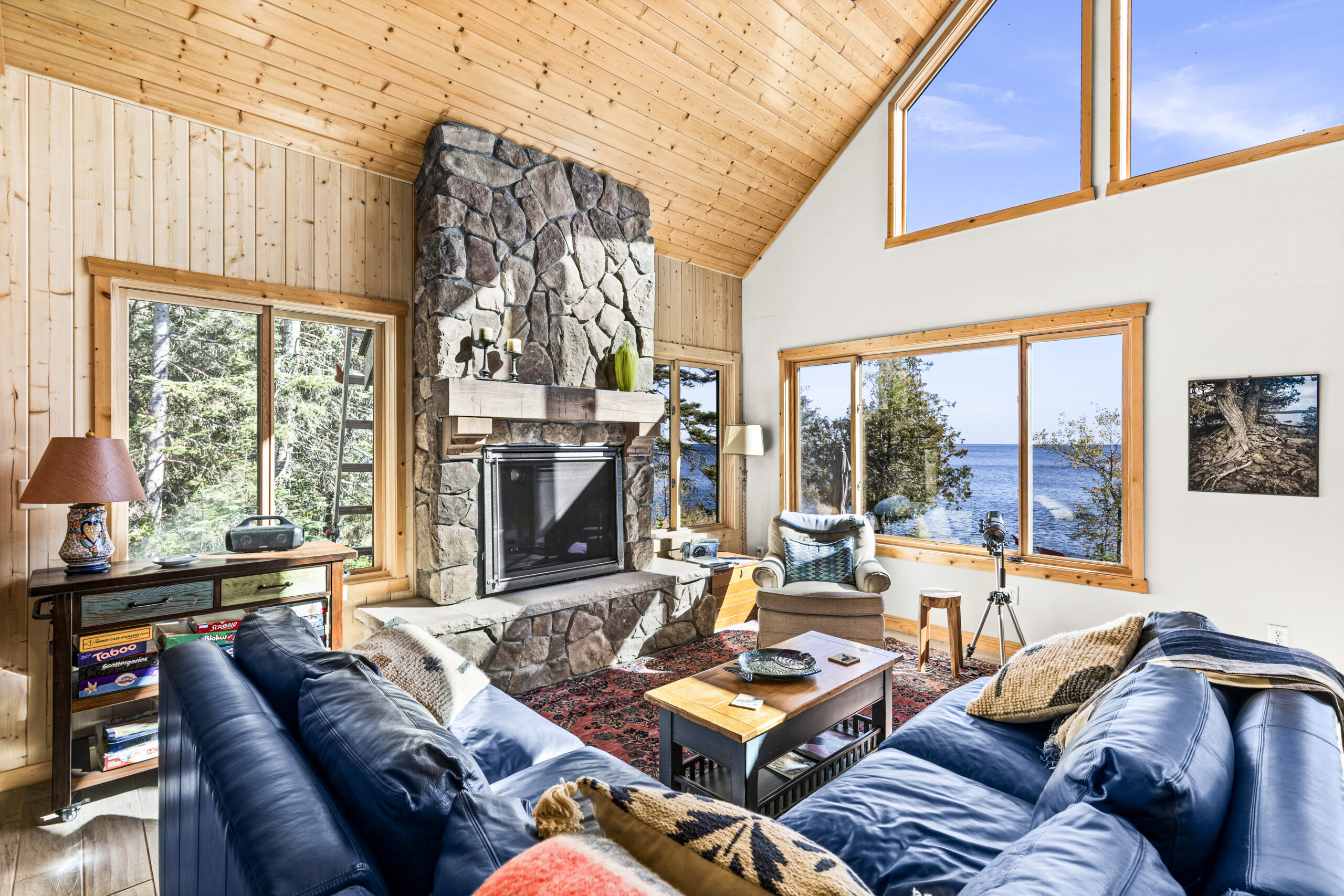
The real test of a window isn’t the energy bill, it’s the “chair test.” In a standard home, you wouldn’t want to put your favorite reading chair right next to a large window in February. You would feel the “cold radiation” coming off the glass.
In an Above Code home, the glass is warm enough that you can sit right against it. It expands the usable square footage of your home. “We used to avoid sitting by the big picture window in February. After Works replaced them with high-performance units and proper sealing, that’s now our favorite spot in the house,” says Elena M., a client from the NYC Metro area.
Your Next Step
Don’t let your windows be the “leaky bucket” of your home. Whether you are building new or looking to upgrade your current envelope, let’s look at the data together. We can help you select apertures that provide the view you want with the performance you need.
[Schedule Your Free Consultation with Works Construction]
Frequently Asked Questions
Is triple-pane glass worth the extra cost? While triple-pane windows can cost 15% to 25% more than double-pane, the “payback” isn’t just in energy savings. It is in thermal comfort and durability. By preventing condensation, you avoid the cost of repairing rot and mold down the road. Most of our clients find that the sound-dampening alone makes it worth the investment.
What is a U-Value and what should I look for? Think of the U-value as the opposite of an R-value. While R-value measures resistance to heat, U-value measures the rate of heat loss. The lower the number, the better. In a cold climate like the Northwoods, you should look for a whole-unit U-value of 0.20 or lower.
Why are my new windows still feeling drafty? If the windows are high-quality, the “draft” you feel is likely convective cooling. The glass is cold, cooling the air next to it, which then falls to the floor. However, it could also be a poor air seal around the frame. We use infrared cameras during our audits to determine exactly where the heat is escaping.
Do “Low-E” coatings make a difference? Absolutely. Low-Emissivity (Low-E) is a microscopic metallic layer applied to the glass that reflects heat. In the winter, it reflects your home’s heat back inside. In the summer, it reflects the sun’s heat back outside. We customize the type of Low-E coating based on which way the window faces.
What are “Tilt-and-Turn” windows? Common in Europe and high-performance “Above Code” builds, these windows have two functions: they can swing in like a door for easy cleaning or “tilt” in at the top for secure ventilation. Because they use a compression gasket (like a refrigerator door), they are significantly more airtight than standard sliding or double-hung windows.
How long do high-performance windows last? A high-quality window, installed with proper flashing and “Above Code” techniques, should easily last thirty to fifty years. The key is the durability of the seals and the frame material. We prefer fiberglass or thermally broken aluminum over vinyl, as they don’t expand and contract as much, which keeps the seals intact longer.
About the Author
The Works Construction Editorial Team is composed of veteran builders and designers who specialize in the “Above Code” philosophy. Operating across the Northeast, we bring a technical, building-science-led approach to every project. We understand that in a cold climate, the details like window flashing and thermal breaks are what separate a beautiful house from a comfortable home. Our team is constantly researching global advancements in glazing technology to bring the best products to our clients in the Northwoods and the NYC Metro area. We believe in craftsmanship and durability, ensuring that every window and door we install is a permanent upgrade to your quality of life.